
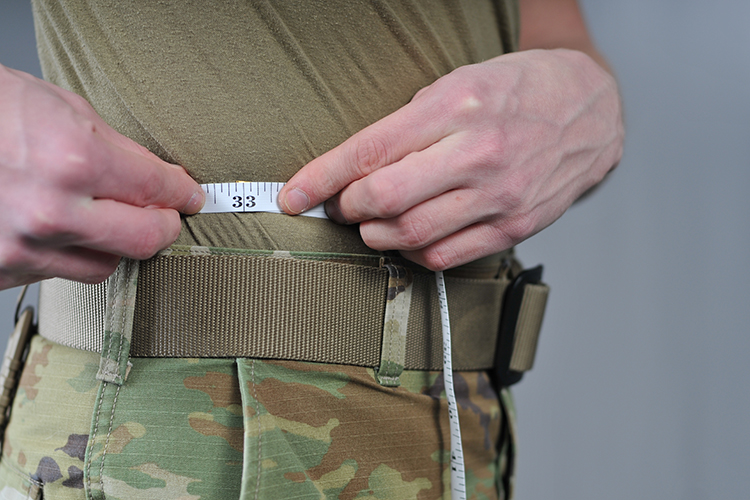
 An Airman measures his waist at the 185th Air Refueling Wing // U.S. Air National Guard Photo
Warfighters to Weightwatchers: Veteran Obesity and its Readiness Implications
Each year, tens of thousands of recruits graduate from basic training and join the U.S. military—many of them in the best shape of their lives. If the latest figures persist, nearly half of them—47%—will have obesity as veterans. An estimated 82% of U.S. military veterans currently have body mass indexes (BMIs) in either the overweight or obesity range, exhibiting far higher rates than their non-veteran counterparts. Though veterans have been left to contend with this crisis largely on their own, its consequences can be felt far more broadly, from our healthcare system to the structures we depend on for national security.
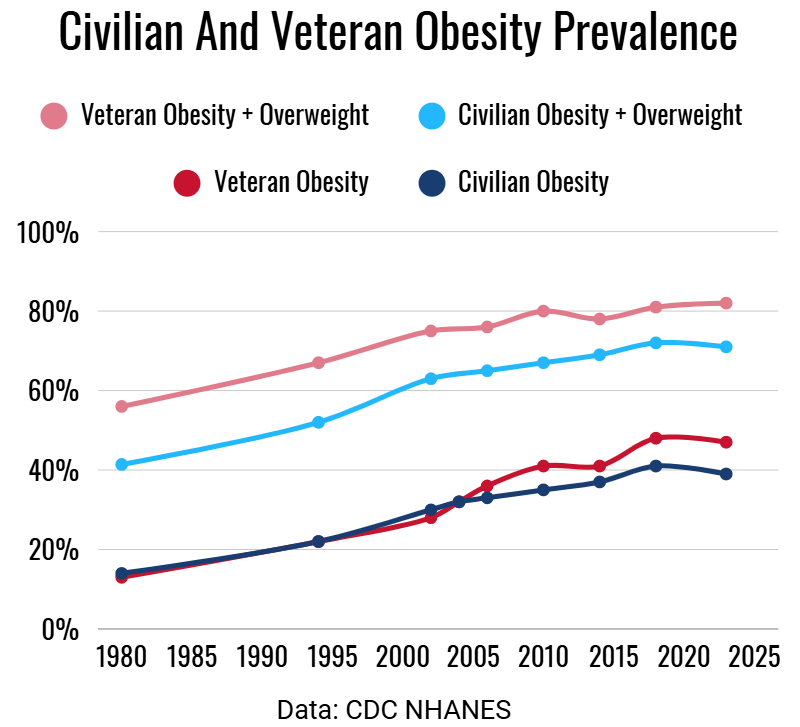
ASP’s past work has brought attention to the growing obesity crisis among military servicemembers, but the crisis only worsens when they leave the service. Veteran obesity rates first began to outpace civilian rates in about 2004. Over the course of the next two decades, the active-duty obesity rate doubled and translated into a similar shift in the veteran population, with Iraq and Afghanistan veterans a population of significant concern.
What is Obesity and Why is it So Common in Veterans?
Obesity is a chronic disease, driven largely by genetics, that involves abnormal body fat accumulation, makes sustained weight loss difficult, and increases the likelihood of a range of other illnesses. In people with obesity, hormones interrupt normal appetite regulation and metabolism, a phenomenon that can persist even after weight loss—weakening the ability of diet, exercise, and discipline to help people lose weight and keep it from coming back. Evidence suggests that the combination of experiences and settings that veterans share leave them more likely to deal with obesity and its related conditions than the rest of the population. The military’s focuses on individual responsibility for diet, exercise, and appearance don’t address many of the factors for obesity, especially genetics, and instead contribute to a stigma that presents a significant obstacle to treating obesity. The impact of that stigma likely persists in the veteran population, where veterans no longer have whatever benefit the military’s structure and exercise programming may have provided them, but may have the injuries, PTSD, combat exposure, and other veteran-specific contributors to obesity that the civilian world may not understand.
Though all servicemembers go through a mandatory Transition Assistance Program (DoDTAP) when returning to civilian life, there is no comprehensive weight management component. Instead, most servicemembers are left with weight gain as another of the many unforeseen issues they have to manage on their own, frequently in areas with lower access to supermarkets, convenience stores, and commercial fitness facilities. The active component may be able to kick out servicemembers who don’t meet weight standards and then view the cost solely in terms of lost manpower and expertise, but that effectively passes the buck to the servicemember themselves and to the healthcare system (specifically the VA) that is responsible for them.
What This Means for Veterans and the VA
Though the active-duty obesity rate (24%) is high and has skyrocketed over the past two decades, it is still lower than the civilian rate (40%). Rather than slowly equalizing as servicemembers integrate back into the civilian population, this gap quickly closes, then flips after servicemembers transition out of the military. One third of recently-discharged veterans enrolled in VA healthcare have obesity, and 98% have a weight gain of 22% to 40% over the ten years after discharge.
This translates to higher risk of heart disease, pain and musculoskeletal disorder, COPD, diabetes, cancer, sleep apnea, arthritis, liver and kidney diseases, depression, and other mental health issues, lower health-related quality of life, and up to three times as much money spent on healthcare. For the VA, this in turn means increased strain on staff and resources. If the additional cost of treating obesity in the 20.5% of veterans who use the VA for primary care is similar to that of treating civilians, then the VA is paying roughly an additional $3 billion a year due to obesity. This figure likely undercounts the actual VA costs due to BMI underrepresenting actual clinical obesity.
What This Means for National Security and Readiness
Children of veterans with obesity have more than twice the likelihood of having obesity as well. Indeed, poor diet and overweight/obesity are the top physical health concerns of Army families. This, in-turn, can translate to future recruiting issues. Only 32% of active-duty family members would recommend military service to a young family member, largely due to quality-of-life concerns. With a recruiting pool mainly composed of relatives of veterans, and for whom obesity is already the number one disqualifier, the veteran obesity crisis may jeopardize the future of the force.
The veteran obesity crisis also bears significant implications for the Individual Ready Reserve (IRR), a component of the U.S. military created to offset the force reduction after WWII by establishing a pool of former servicemembers the nation can recall during war or other emergencies. The IRR has been called up several times since then, including over 20,000 recalled during the Global War on Terror, and has drawn increased attention in recent years including in connection to the war with Iran. The veteran population the nation would call on in an emergency or to fill critical manning gaps today would have drastically higher rates of obesity than it did when the force was established after WWII.
VA and obesity professionals have been working to address this phenomenon for decades, and have developed robust guidelines and programming (notably the VA MOVE! Program) suited to meeting each veteran’s individual needs. More recently, new medications have shown unprecedented effectiveness for treating veteran obesity and many other conditions veterans are at higher risk for. However, only a fraction of veterans with obesity are participating in weight management programming or able to access the drugs. Until access to treatment options improves or the active component becomes able to tackle its obesity crisis and connect servicemembers to weight management resources as they transition to the veteran population, veterans, their communities, the healthcare system, and America’s readiness will continue to pay the price.