
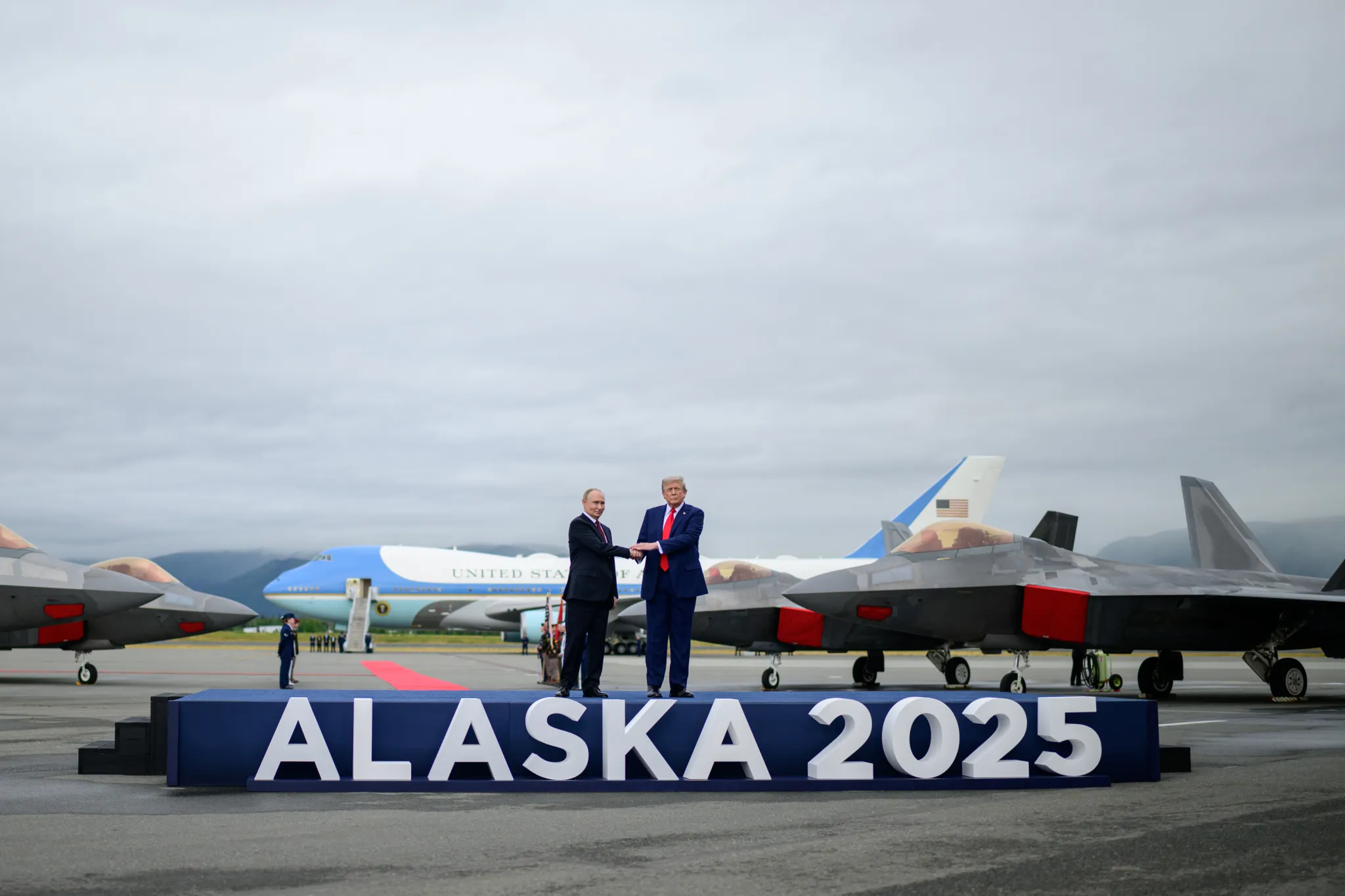
 Can President Trump leverage his relationship with President Putin to secure a replacement or extension to New START? White House photo.
The U.S. Needs to do Something about New START
New START, the last remaining nuclear arms treaty between the United States and Russia, is due to expire on February 4 of this year. The treaty entered into force in 2011 and was extended by a single five-year extension option in 2021. For the past 15 years the treaty has served as the bedrock of nuclear arms control between the world’s most heavily armed nuclear powers. Though in recent years Russia has provocatively reduced its compliance with the treaty, it is in both countries’ interest to pursue renewed commitment to nuclear arms control.
During the first Trump administration, the president’s team sought a replacement treaty that would include China after New START was due to expire in 2021. This effort, though admirable in concept, failed to produce any significant results; it was ultimately rebuked by China since it had not yet reached a point of nuclear armament comparable to the vast arsenals held by the U.S. and Russia. Simply put, China wasn’t in the same nuclear league, but it’s been trying to catch up for the past several years.
By 2021, the Biden administration, with only a few weeks to act between its inauguration and the expiration of the treaty, elected to pursue the 5-year extension allowable under the original treaty. Russia agreed and acted quickly as well, signaling that both sides believed in the importance and value of the treaty in preventing a new nuclear arms race.
Unfortunately, during the course of the pandemic era, inspections under the treaty were delayed, and Russia continued to institute further delays in the proceeding years.
By February of 2023, roughly a year after Russia launched its major outright invasion of Ukraine, Russian President Vladimir Putin announced that Russia would suspend its cooperation under New START. This move was intended to be deliberately provocative and cause hesitation in Ukraine’s allies, instilling a fear that Russia was seriously considering going nuclear should they increase their support for Ukraine’s defense. Russia was quick to announce that although it would be suspending cooperation such as inspections and data exchanges, that it would abide by the treaty’s numerical limits on armaments. In response, the U.S. implemented its own treaty countermeasures.
Fast forward to September 2025, and Putin suggested that Russia would still remain within New START’s limits for an additional year if the U.S. does so as well. The Trump administration has yet to formally respond to this proposal with mere days to go. While the president has said he’d like to maintain the limits, he’s also expressed a degree of nonchalance should the treaty expire, saying “If it expires, it expires,” and claiming, “We’ll just do a better agreement.”
Well, it’s not that simple.
Like trying to negotiate an end to the war in Ukraine, negotiating a “better” nuclear arms control treaty is easier said than done. It can take years to come to an agreement on the principles, if not the specific, multilingual details of how the limits and requirements should be implemented. Teams of negotiators and career experts work tirelessly to come to these agreements and prevent them from falling apart over minute wording. When negotiating a technical agreement like New START, definitions, numbers, and capabilities of weapons that don’t always fall into easily defined categories all have to be agreed upon. It’s not as simple as just doing a better agreement. Russia gets a vote, too.
It’s certainly possible that President Trump is intentionally running out the clock in order to create a degree of desperation on the part of the Russians. Putin’s multiple declarations of a willingness to maintain the numerical limits, both in his suspension of cooperation and in his desire for a one-year extension, could be a tell that he does not want to enter a new arms race—and could make him amenable to new demands from the U.S., but this is far from guaranteed. In the middle of an active war in Ukraine, the expiration of New START could create pressure to spend money Russia simply doesn’t have to keep up with a potential or completely unrestrained American nuclear buildup. This is probably the last thing that Putin wants. At the same time, his continuing defiance of the inspections also makes verification difficult and has accomplished nothing for nuclear security. Keeping this in mind, it’s important to observe that he has also proven a shrewd negotiator in the course of the Ukraine peace discussions, garnering relatively little criticism or public pressure from the U.S. president compared to America’s Ukrainian allies.
But this level of brinksmanship in allowing a treaty to lapse can be dangerous, especially when dealing with weapons that have world ending consequences. If New START expires and there are no active agreements or negotiations to replace it, there’s nothing holding back a massive nuclear arms race between the two countries other than self-restraint and perhaps finances. This would be unwise. If one country builds up, the other will likely do so in response—China’s expansion efforts demonstrate this. With more nuclear weapons in the world, the more likely there will be an accident due to unintentional escalation or errors in handling or transportation. One option is that the U.S. could opt to maintain its current size even if Russia expands, saving tons of money and allowing Russia to waste money on weapons that essentially can’t be used. But if Russia sees that its own nuclear expansion is unanswered, it may no longer feel obligated to join a future agreement that mutually restricts both country’s nuclear arms.
Clearly, a strategic nuclear arms control agreement is in the best interest of the United States. If a replacement for New START is not immediately on the table, the best option, as scholar Ariel Petrovics contends, is to accept Putin’s extension offer and work diligently to renew full Russian compliance while a new treaty or more robust extension is worked out. Perhaps, however, President Trump’s rather friendly relationship with the Russian President could provide an opportunity grease the negotiation process for something “interesting.”