
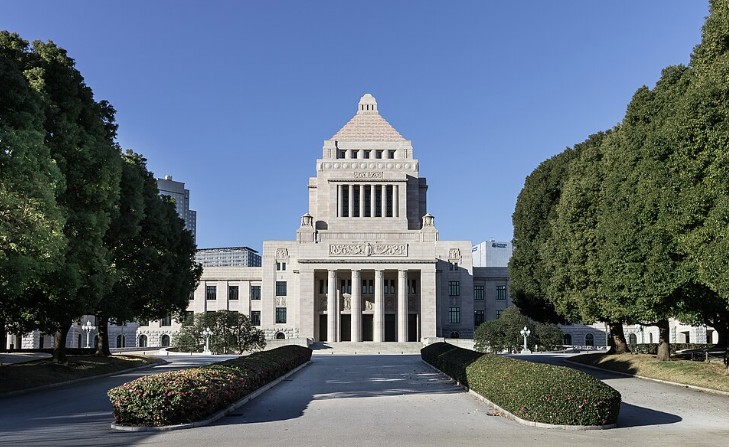
 Japan’s National Diet Building // Image credit: Kakidai, Wikimedia Commons
The Sixth Eye: Japanese Accension to the Five Eyes Alliance
Japan has taken a major step toward modernizing its intelligence architecture. On May 27, Tokyo passed legislation establishing a National Intelligence Council and National Intelligence Bureau (NIB), creating a centralized framework for intelligence coordination, analysis, and policymaking. The reforms come as Japan faces an increasingly complex security environment shaped by China’s military rise, North Korean provocations, and deepening cooperation between Beijing, Moscow, and Pyongyang. More importantly, the restructuring may create a pathway for deeper intelligence integration with the Five Eyes alliance, raising the prospect of Japan eventually becoming a “Sixth Eye” within the world’s most exclusive intelligence-sharing partnership.
Deeper integration with Five Eyes is not a new ambition for Tokyo. In a 2020 interview, then-Defense Minister Kono Taro stated that Japan was “eager” to expand cooperation with the intelligence-sharing partnership. The strategic rationale for doing so has only strengthened in recent years. Given its geographic proximity to China, North Korea, and the Taiwan Strait, as well as its sophisticated signals intelligence capabilities, Japan is well positioned to contribute meaningfully. However, closer integration will require Tokyo to strengthen the institutional foundations necessary for intelligence sharing, including personnel vetting, information security, classification procedures, and cyber hygiene standards comparable to those of existing Five Eyes members.
Japan is not undertaking these reforms alone. Both the United States and Australia have assisted Tokyo’s efforts to modernize its intelligence capabilities, reflecting a shared interest in strengthening regional intelligence cooperation. Japan also hosted a Five Eyes intelligence meeting in 2024, further demonstrating its growing integration with the group’s security priorities. Yet closer cooperation does not automatically translate into membership. Unlike traditional intelligence-sharing arrangements, Five Eyes relies on deeply integrated security procedures, legal protections, and trusted information-sharing practices. As Tokyo continues its reforms, both Japan and Five Eyes members must consider whether deeper integration serves their long-term strategic interests.
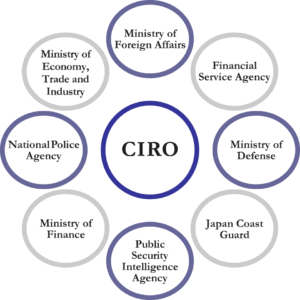
Intelligence community of Japan under CIRO where information silos would exist (the color change is merely aesthetic) // Graphic by CIRO
Japan’s intelligence modernization is structured in three stages and directly address several long-standing barriers to deeper intelligence cooperation. Prior to the legislation, the Cabinet Intelligence and Research Office (CIRO) acted as an information coordinator but lacked the legal standing to force other government ministries to share their briefs. The first stage of reform gives the National Intelligence Bureau statutory authority to mandate data sharing from agencies across the government. The open flow of raw data throughout ministries will allow decades of institutional silos to be broken down. The second stage involves the adoption of stronger counterintelligence and anti-espionage measures. Critics have long described Japan as a “spy paradise” because of relatively weak espionage laws, a perception that has raised concerns among intelligence partners regarding the protection of sensitive information. Strengthening these safeguards would improve Tokyo’s ability to protect both domestic intelligence and information shared by allied services. The final stage is the creation of a full-fledged foreign intelligence service, bringing Japan closer to the organizational model employed by most major intelligence powers. Collectively, these reforms would strengthen Japan’s ability to assess its threat environment militarily, economically, and politically, while also creating a bona fide agency that can further cooperate with Five Eyes partners.
Traditional intelligence-sharing arrangements fall short of what makes the Five Eyes model unique. While most partnerships operate on a selective basis, Five Eyes is built upon a sharing-by-default mandate, personnel integration, and global geographic burden-sharing. Yet accession would still require a level of trust, security standardization, and political commitment that extends beyond existing intelligence-sharing relationships. Whether Japan ultimately becomes a “Sixth Eye” will depend not only on Tokyo’s reforms, but also on whether current members believe expansion strengthens the partnership’s ability to address emerging security challenges in the Indo-Pacific.
Japan’s intelligence reforms represent the most significant restructuring of its intelligence architecture in decades. Stricter anti-espionage laws dispel the idea that Japan is a “spy paradise,” while the mandate to share data across institutions will allow Tokyo to process threats and information. By taking these steps, and laying the groundwork for a dedicated intelligence service, Tokyo is addressing many of the institutional barriers that have historically limited deeper intelligence cooperation. While membership in the Five Eyes partnership remains far from guaranteed, these reforms bring Japan closer to the standards and capabilities expected within the Five Eyes. At a time of growing competition with China, Russia, and North Korea, stronger intelligence integration between Japan and the other members would enhance regional awareness, improve decision-making, and strengthen collective security throughout the Indo-Pacific.
Image credit: Kakidai / Wikimedia Commons under CC BY-SA 4.0