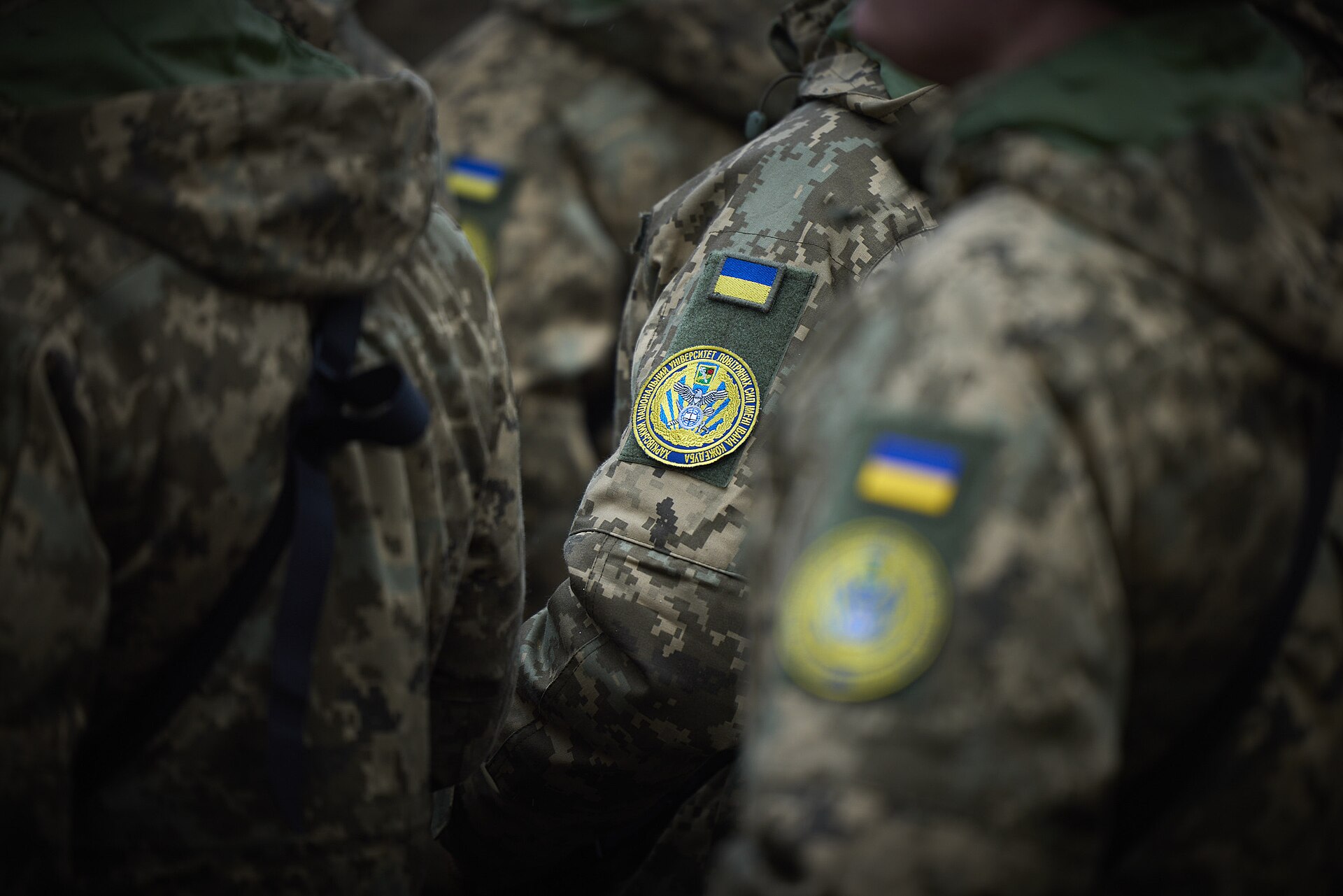
 Source: President of Ukraine
Is the U.S. Overlooking Ukraine’s Strategic Military Value?
U.S. pressure on Ukraine has reached an alarming level, raising questions about whether Washington is overlooking Ukraine’s strategic military value. On October 16, President Trump signed an executive order waiving most provisions of a new sanctions law that Congress passed by large margins, a week after announcing a deal for Russian diesel supplies. The waiver doesn’t undo sanctions imposed earlier, and the White House argues that enforcing the new ones could hinder peace efforts. Trump has also suggested that imposing the sanctions would have derailed negotiations for the release of U.S. citizen, Stephen Hubbard, whom Russia freed on October 21.
Meanwhile, the Wall Street Journal reports that Elon Musk ordered limits on Ukraine’s access to Starshield, and Ukrainian officials say the restriction disrupted drone operations, including hindering their ability to defend against Russian attacks. With diesel prices a major issue ahead of the November midterms, fuel costs may explain the timing. More concerning is what these steps suggest about the White House’s willingness to sacrifice Ukraine’s strategic military value for short-term economic and political gain.
For more than four years, Ukraine has held off a military that is larger on paper: possessing roughly 1.5 times its active personnel and several times its tanks and aircraft. The war offers a real-world picture of modern combat in all domains, and Ukraine’s resistance keeps the fighting off NATO’s territory and restricts Russia’s ability to apply pressure elsewhere or against the U.S. directly. This gives the U.S. and its allies a valuable opportunity to learn from Ukraine’s battle-tested operations. Ukraine pays for that opportunity in lives and cities, which is even more reason to treat it as a steadfast partner.
Ukraine’s Strategic Military Value to the United States
The most notable lessons come from drones. Cheap, mass-produced and maneuverable; they have changed warfare. A 2025 Military.com report notes that surveillance drones have eroded traditional cover and concealment, forcing a rethink of decades-old infantry and armor tactics. The Pentagon is seeking roughly $50 billion in additional funding to scale up production of drones and autonomous systems, with the goal of rapidly adapting and fielding new technologies. However, the proposed funding remains subject to congressional approval.
The lessons Ukraine has learned in defending against one-way attack drones have also benefited the U.S. directly, as the U.S. military adopted Ukrainian counter-drone technology to defend against Iranian drone attacks amid the current Iran-War.
Equally instructive is speed. Ukraine’s Brave1 marketplace lets front-line units order drones and other equipment directly from manufacturers. The U.S. acquisition process, by contrast, is often weighed down by bureaucracy. A 2025 executive order sought to modernize it, and whether it has closed the gap is something Congress should track.
The U.S. cannot assume it can rely indefinitely on the conventional military advantages it has maintained for much of the modern era. The war in Ukraine demonstrates how relatively inexpensive technologies, particularly drones, can impose significant costs on even a militarily superior adversary. A competitor does not necessarily need to defeat the U.S. outright to undermine its objectives; it may only need to inflict enough losses and sustain the fight long enough to erode its opponent’s political will. In this respect, the U.S. has lessons to draw not only from Ukraine’s ability to resist a larger adversary, but also from Russia’s experience fighting a prolonged war of attrition. Despite its greater size and military resources, Russia has suffered heavy casualties and struggled to achieve its objectives quickly. Not every lesson from the war will translate directly to a potential U.S. conflict, but failing to adapt to the realities it reveals could leave American forces unprepared for future adversaries.
Ultimately, the greatest risk comes not from failing to learn from Ukraine—but allowing Russia to win. A Russian victory could weaken NATO, embolden Moscow to pursue further territorial expansion, and raise the risk of future conflict in Europe. Preventing that is in the U.S. national security interest. Washington can build on the 2024 U.S.-Ukraine Bilateral Security Agreement, but the missing piece is a predictable, measurable partnership that can withstand changes in administration. Three steps would help:
- Congress should back the 2024 agreement with multiyear appropriations for Ukraine’s defense rather than year-to-year decisions.
- At a minimum, Washington should not restrict access to systems like Starshield that Ukraine uses to defend itself.
- A permanent U.S.-Ukraine defense working group should review battlefield lessons quarterly, test emerging technologies, and recommend changes to U.S. doctrine, training and procurement. Annual reports to Congress should track which Ukrainian innovations were tested, adopted or rejected, and why, along with progress on acquisition reform.
More than four years of full-scale war have made Ukraine a leader in modern warfare, from inexpensive drones and autonomous systems to battlefield software and rapid weapons development. Ukraine’s strategic military value lies in the practical experience its battle-hardened military offers the U.S. to strengthen its own military readiness and defense capabilities. The U.S. is better served by positioning itself as a long-term defense partner and supporter of Ukraine in its fight against Russia, gaining valuable insight into Russian military tactics, testing emerging technologies under real combat conditions, and preparing American forces for future conflicts involving drones and electronic warfare.