
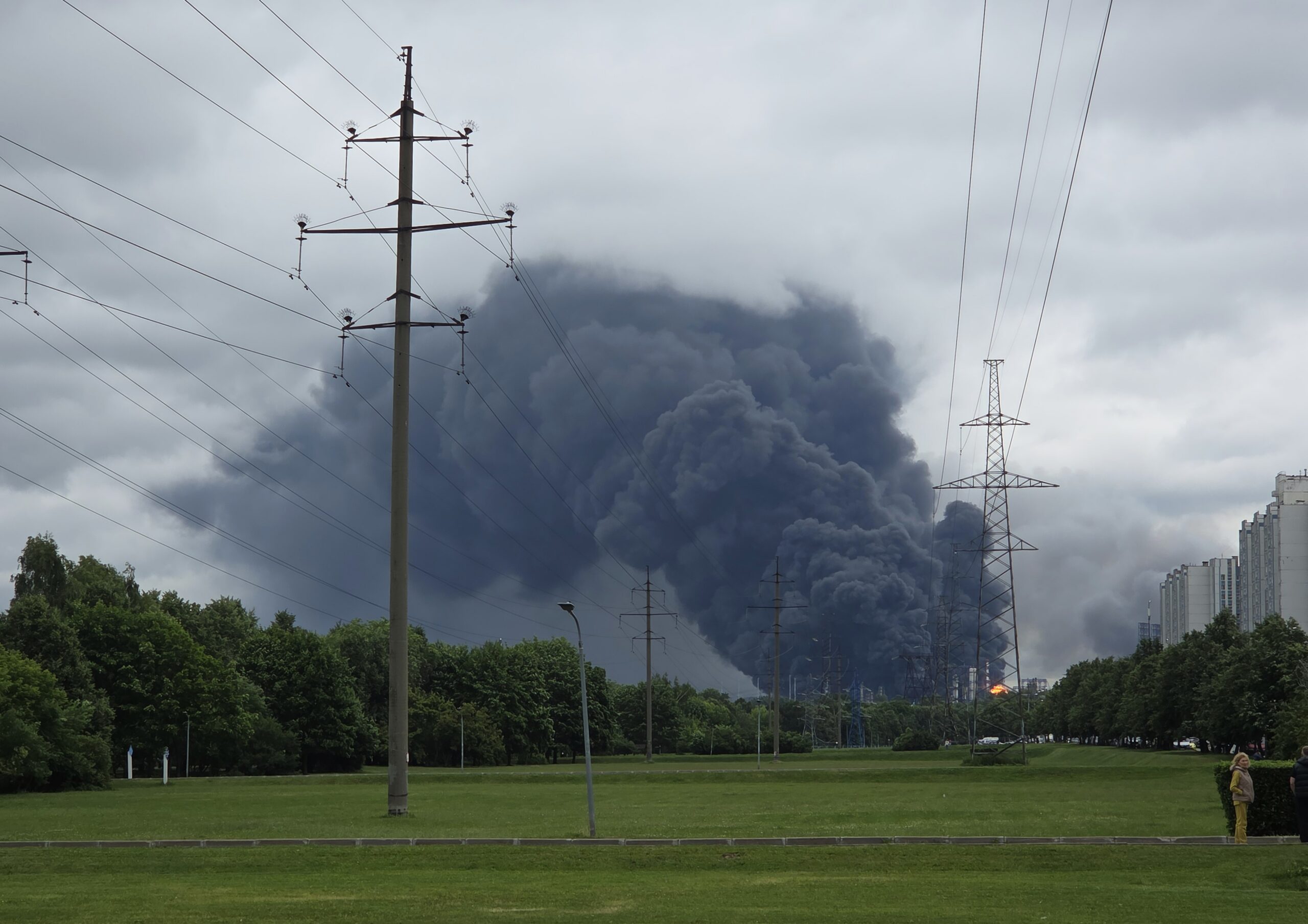
 Fire at the Moscow oil refinery on June 18 // Rotafinus / Wikimedia Commons Public Domain
From Export to Import Sanctions: A New Way to Pressure Russia
The death of Senator Lindsey Graham has sparked a push to pass one of the Senator’s signature pieces of legislation: an updated sanctions package targeting Russian oil exports. However, the proposed sanctions package contains a missed opportunity. Traditionally an exporter of refined petroleum products, Russia is currently seeking to import fuel to meet its needs, opening an opportunity to introduce new sanctions on fuel exporters who are now selling to Russia.
Ukraine’s long-range bombing campaign on Russian oil infrastructure has disabled 20 to 42.7 percent of Russian refining capacity, leaving Russia with an excess of crude oil and a deficiency in fuel. Russian officials are scrambling to find solutions to help alleviate this fuel crisis, including fuel rationing, lowering standards for gasoline production, banning the export of gasoline, jet fuel, and diesel, and importing gasoline from India, Belarus, and Kazakhstan to supplement its domestic production. These imports are estimated to total 400,000 metric tons of gasoline per month, making up about 12 percent of Russia’s domestic market consumption during the summer months.
That is a substantial portion of the country’s gasoline consumption, especially when considering that Russia is a net exporter of refined oil products under normal circumstances. Before the Ukrainian bombing campaign, much of Russian crude oil would be refined before export. Now some of its crude oil has to take a long and expensive round trip to India to become usable fuel, leaving Russia in a precarious situation.
The U.S.-Iran conflict is exacerbating Russia’s oil woes. Shipping disruptions through the Strait of Hormuz have raised the market price of refined oil products, while crude oil has stayed comparatively cheap. As Ukraine continues to decrease Russia’s refining capacity, Russia will depend more on buying increasingly expensive refined products. With approximately 85 percent of Russia’s refining capacity within range of Ukrainian drones, and repairs taking months to years, this dependence is only likely to worsen as the conflict wears on.
Swiftly making its way through the Senate, Senator Graham’s Sanctioning Russia Act of 2026 would increase pressure on Russia, broadening the scope of existing sanctions and authorizing the President to “impose 100 percent secondary tariffs on countries that continue buying Russian oil and gas.” However, this package misses a great opportunity to further isolate Russia and make this Ukrainian-imposed fuel crisis as costly as possible. To do that, the U.S. should adopt a proposal Kyiv has already put forward to the European Commission.
In early July, Ukrainian Presidential sanctions commissioner Vladyslav Vlasiuk discussed a “sanction-related response” to discourage countries from exporting refined petroleum products to Russia. These exports to Russia are currently not subject to any internationally imposed restrictions. Sanctions on exporters to Russia would raise Moscow’s costs and restrict its access to refined fuels, possibly losing access to some suppliers altogether. This would further isolate Russia and free up fuel for the global market.
This isn’t the first time the bill’s scope has been expanded. Senator Richard Blumenthal, the bill’s cosponsor, opposed a push to broaden the tariffs as the bill had been carefully negotiated with the Trump administration and was precisely targeted to limit collateral damage to the U.S.’s international partners. A further expansion of the bill could raise similar concerns and slow its rapid momentum in the Senate.
However, rushing the bill through without incorporating Kyiv’s proposal risks leaving Russia a lifeline when it is most vulnerable. Given how costly the current fuel crisis already is for Russia, the U.S. does not need to trigger these proposed sanctions immediately to benefit from them. Simply communicating a credible threat of further limiting Russia’s fuel imports would raise the stakes of any ceasefire or peace talks, without the diplomatic cost of sanctioning non-aligned countries like India. It may be that such legislation best serves the U.S. as a threat which further incentivizes Russia to stop their war.
For years, policymakers have focused on restricting Russian oil exports. Now, with Moscow increasingly dependent on imported refined fuels, policymakers have an opportunity to target what Russia must buy. Congress should expand secondary sanctions to cover exports of refined petroleum products destined for Russia, complementing existing restrictions on Russian energy exports. Closing that gap, or even threatening to do so, would be beneficial to Ukraine’s war effort. This strategic move would increase pressure on Russia to halt its assault or suffer increased costs and a worsening fuel crisis at a moment of unprecedented vulnerability.