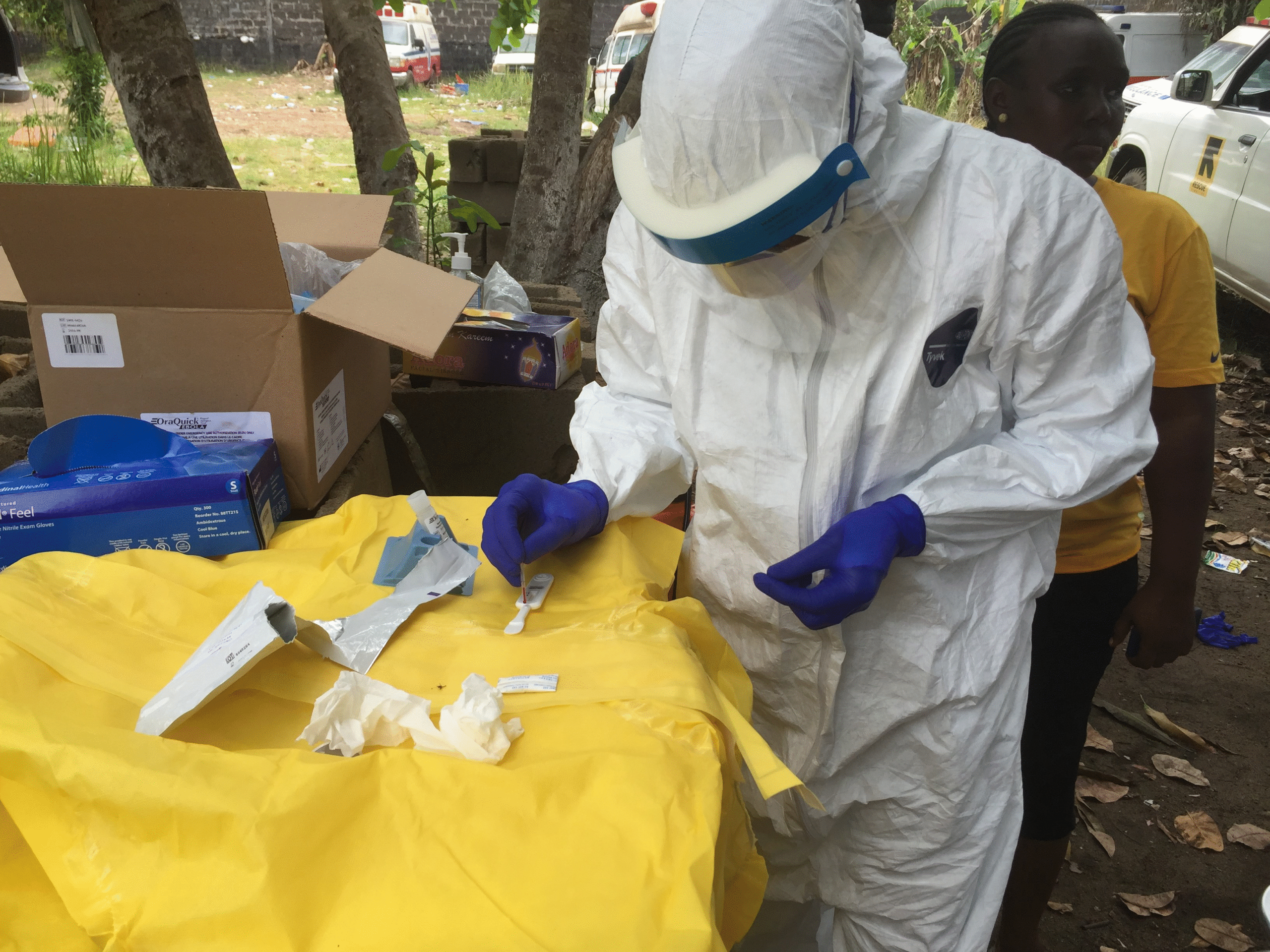
 Epidemiologist implementing a rapid diagnostic test for Ebola. // Photo by John Saindon (CDC)
From Aid Cuts to Ebola: A Predictable Crisis Unfolds
As of June 22, 1,023 confirmed cases of Ebola and 256 deaths have been reported in Uganda and the Democratic Republic of the Congo (DRC). This outbreak, which was confirmed only a month ago on May 15, has already exceeded the pace of the deadly 2014-2016 Ebola crisis. As global health organizations like the World Health Organization and the International Committee of the Red Cross face massive funding cuts due to the withdrawal of the United States and dissolution of USAID, containment operations on the ground lack essential tools like personal protective equipment and body bags. Before the withdrawal was finalized, critics argued these cuts would seriously hinder efforts to contain and combat contagious diseases; with the current outbreak, those fears have now been realized.
In July 2025, the U.S. government cut foreign aid funding by over $8 billion. In September of the same year, it withheld $4.9 billion in congressionally-approved foreign aid from health organizations. President Trump argued these programs were ineffective and wasteful, but now humanitarian groups struggle to keep pace with disease detection, quarantining, and basic medical care. U.S. funding is also critical for vaccine development, and no vaccine currently exists for this new strain.
This difficulty is most apparent in the DRC, with most cases recorded in the provinces of North and South Kivu, a region struggling with an escalating conflict between the Armed Forces of the DRC and militant insurgent groups. The insurgency’s active contestation of these provinces limits the ability for the government to play an active role in combating Ebola, thus leaving international humanitarian groups to provide the bulk of on-the-ground medical support for the region’s residents.
An advisor for Africa Centres for Disease Control and Prevention mourned the loss of USAID’s logistics expertise, stating that it is sorely missed in the current outbreak. Meanwhile, CARE’s country director in the DRC has said, “With proper funding, we would have had prepositioned stock and begun distributing critical supplies like PPE from day one, but instead, we started with nothing and lost 10 days.”
This lack of funding and expertise is a danger to both the citizens of affected areas and Americans at home. The deadliest Ebola outbreak on record stretched from December 2014 to June 2016 with over 28,000 confirmed cases and over 11,000 deaths, including two deaths in the United States. In that outbreak, confirmed cases did not exceed 800 until eight months in, and deaths did not exceed 180 until six months in. The current outbreak has surpassed both figures in only a month.
While the previous major outbreak only resulted in two deaths on American soil, this current outbreak is poised to inflict a much higher cost, especially as contagious diseases thrive when prevention funding is discontinued. Compounding this danger, the current acceleration of climate change and environmental degradation is positively correlated with both the increased prevalence of communicable diseases and exacerbated disease outcomes.
As observed with the COVID-19 pandemic, communicable diseases do not respect borders and can easily catch the world off guard. Even with substantive disease detection and containment protocols, the global response to the pandemic was slow and largely unprepared. Currently, Ebola is only transmitted through direct contact; however, diseases have a greater chance of mutation when the rate of transmission is high, potentially making them more transmissible and harder to contain as they evolve. The comparatively rapid spread of the current outbreak also highlights how funding cuts have strained global crisis preparedness.
America should reverse course and reinvigorate its funding of global health organizations. If it fails to do so, the U.S. is actively endangering its citizens by making them vulnerable to another global pandemic. The wounds from COVID-19 are still fresh, yet there exists a palpable sense that the U.S. government has abandoned the lessons it learned. Renewing funding to these critical organizations will not only protect U.S. citizens but also enhance stability in conflict-affected regions, mitigating the need to undertake costly interventions caused by disease-related instability and militant gains.
The current outbreak of Ebola in the DRC and Uganda highlights the willful ignorance of the U.S. government in combating the spread of communicable diseases. By ignoring the lessons learned during the pandemic, the global health ecosystem is far less prepared for a new international health crisis than it was in 2019. The current system of global health funding has never been perfect, but cutting all U.S. funding is not a defensible remedy. Instead, meaningful cooperation and a detailed review of aid efficacy is more likely to cut long-term costs while shoring up the defense of American citizens.