
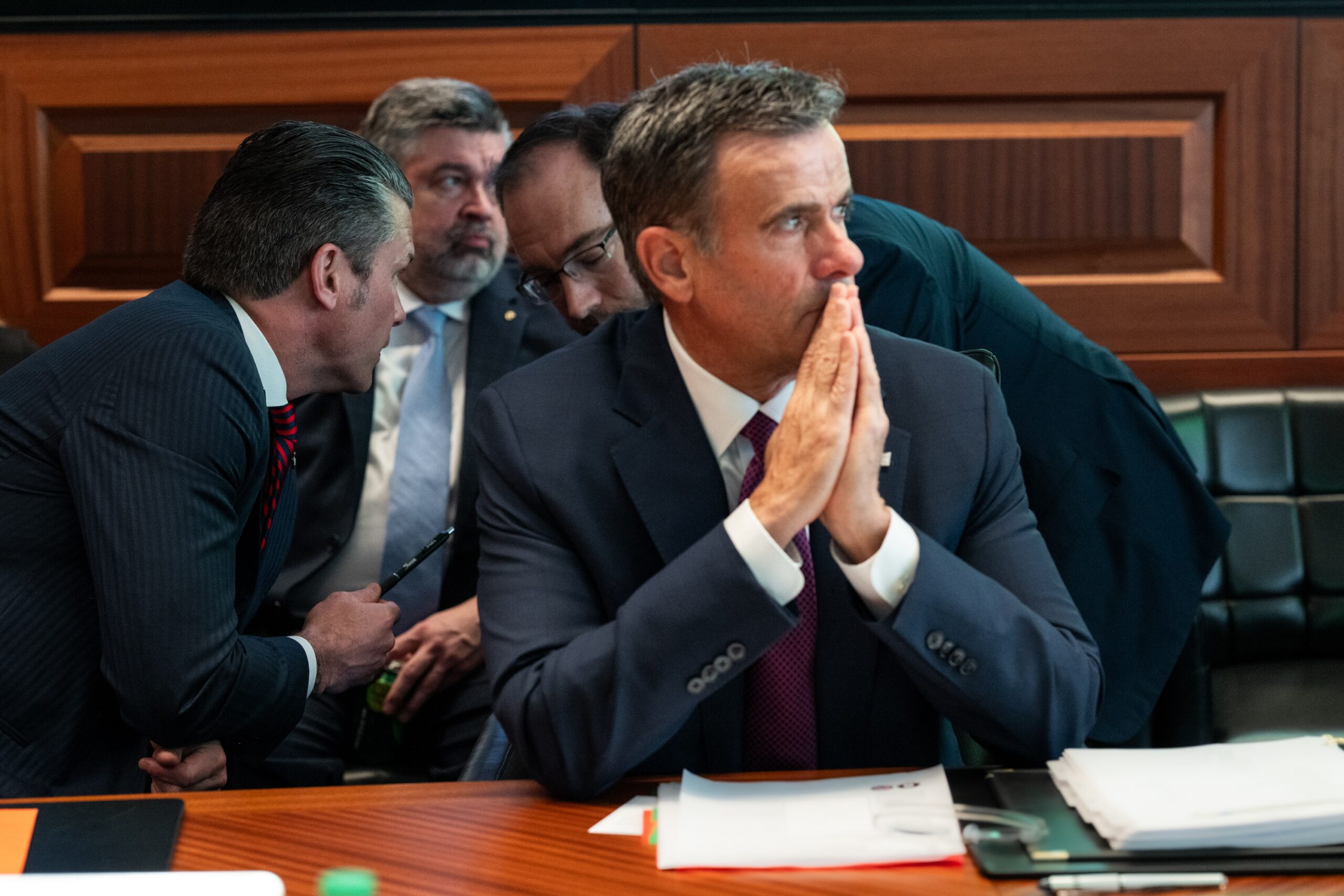
 John Ratcliffe and the national security team meet in the Situation Room // White House
The CIA Director’s Moscow Trip and Trump’s Credibility Problem
On Tuesday, August 25, CIA director John Ratcliffe made an atypical, unannounced trip to Moscow, meeting with Russian intelligence officials. According to reports, the visit covered several topics, but the circumstances have raised more questions than they’ve answered. President Trump has downplayed its significance, but a CIA director’s visit to Moscow is not business as usual, however casually he frames it. It is a tacit admission that the administration needed a messenger whose credibility extended beyond its usual diplomatic channels.
In his second term, Trump has cemented an unconventional approach to international affairs: a strategy of unpredictability, in which U.S. foreign policy is so erratic that both allies and foes stay off balance. This keeps other states in a reactionary position, giving Trump room to extract concessions. However, this strategy only works when the other side’s uncertainty benefits the U.S. Deterrence runs on the opposite logic. A credible threat requires an opponent to believe it will be enforced consistently, regardless of mood or moment. If Trump cannot be trusted to act predictably, his threats carry less weight, weakening NATO’s collective deterrent along with them. Sending the CIA director is a departure from that approach.
Choosing to send the CIA director is not just a practical choice, it also sends a message. Trips like these are rare, and Ratcliffe’s institutional role gives the visit a weight that a conventional diplomatic meeting might not carry. The last time a CIA director made a trip to Moscow was 2021, when William Burns told the Russians the U.S. had learned of their plans to invade Ukraine, and warned them against it. While Russia remained undeterred in 2021, this event illustrates how the intelligence channel can be used to communicate directly at critical moments.
Sending Ratcliffe also demonstrates a departure from business as usual and the typical niceties of diplomacy. Ratcliffe is close to Trump, but he isn’t one of the normal diplomatic figures Trump prefers, such as Jared Kushner or Steve Witkoff, who have maintained amicable relations with the Russians as they attempt to mediate a peace deal to end the war in Ukraine. These aides have been central to peace talks in which the Trump administration’s position on the Russo-Ukrainian war has swayed back and forth, associating them with the unpredictable nature of the President’s foreign policy. They carry the same discount Trump’s own word does; a warning delivered by someone who might reverse course tomorrow isn’t a warning Moscow has reason to take seriously. Ratcliffe, and the institutional channel he represents, doesn’t carry that baggage. Sending him wasn’t just about the message. It was an acknowledgment that the usual messengers had already spent their credibility elsewhere.
Despite the significance of sending the CIA director, Trump has publicly dismissed the severity of the situation. In an interview with Glenn Beck, Trump called the trip “semi-routine,” and denied Ratcliffe’s visit had anything to do with possible Russian attempts to test NATO resolve. This contradicts reporting which indicates that warning Russia against attacking NATO members was at least part of Ratcliffe’s mission. This refusal to publicly acknowledge the purpose of Ratcliffe’s trip aligns with Trump’s overall strategy of unpredictability, as it allows Trump to maintain his ambiguity publicly, while Ratcliffe could deliver a clear message privately. Simultaneously, a degree of secrecy in this type of high-stakes meeting is completely reasonable, allowing both sides the room to make face-saving decisions free from internal or external pressures.
This event exemplifies a tension at the center of Trump’s foreign policy. Unpredictability can create bargaining leverage, but deterrence ultimately depends on credibility and a prediction that an adversary will respond to provocation in a manner that outweighs the benefit. Trump appears to have borrowed the CIA’s institutional credibility to boost the power of the message he was sending, while preserving his personal strategy based in ambiguity. That is the potential larger problem this episode exposes. The perceived importance of the CIA director as a messenger is a limited resource, as the implied significance of these trips relies in part on that they are rare, reserved for when the stakes of a moment are unusually high. Trump turned to this resource because he lacks other channels that could be used to clearly communicate lines in the sand in a way others would receive as reliable. The more often the administration must rely on institutional messengers to make its warnings credible, the more it exposes the weakness of the strategy that made those messengers necessary. While this hasn’t happened yet, it needs to be considered as the administration continues to pursue its unusual foreign policies.